












Conversion rate optimization works. On average, teams see a 200% return from CRO tools, and a VentureBeat study of 36 optimization tools found that only two failed to deliver real returns. But somehow, most companies still aren’t happy with their conversion rates. Only about 22% actually feel good about how they’re doing.
So clearly, it’s not that CRO doesn’t work. It’s that most teams don’t have the right kind of help to turn insights into real changes. Without the right agency, even the best tools just sit there. You keep spending, but nothing really changes because no one’s showing you where to focus or what’s actually worth fixing.
This list is our attempt to make that easier. We looked for the best Conversion rate optimization agencies that do solid work, ask the right questions, and understand that CRO is about more than changing button colors!
Epic Slope Partners: ESP focuses on CRO with a strong growth and SEO lens. Best for B2B and SaaS teams that want conversion work tied to real long-term business goals.
Conversion: They run structured experimentation programs backed by UX research and data. A solid fit for mid-to-large companies that want a mature, long-term CRO setup.
No Good: The team blends CRO with growth marketing. Works well for startups and scale-ups that want testing alongside acquisition and retention efforts.
CRO Metrics: Their approach is very data-driven and experiment-heavy. Best for product-led or enterprise teams that care about rigorous testing across complex funnels.
Invesp: They are known for systematic CRO frameworks and A/B testing. Good for e-commerce and lead gen businesses that want a clear, repeatable process.
Conversion Sciences: The agency takes a research-first approach to optimization. Ideal for teams that want strong insights before jumping into tests.
Spyralize: Focuses heavily on UX research and structured experimentation to boost conversions. Best for teams with solid traffic that want data-backed insight before testing.
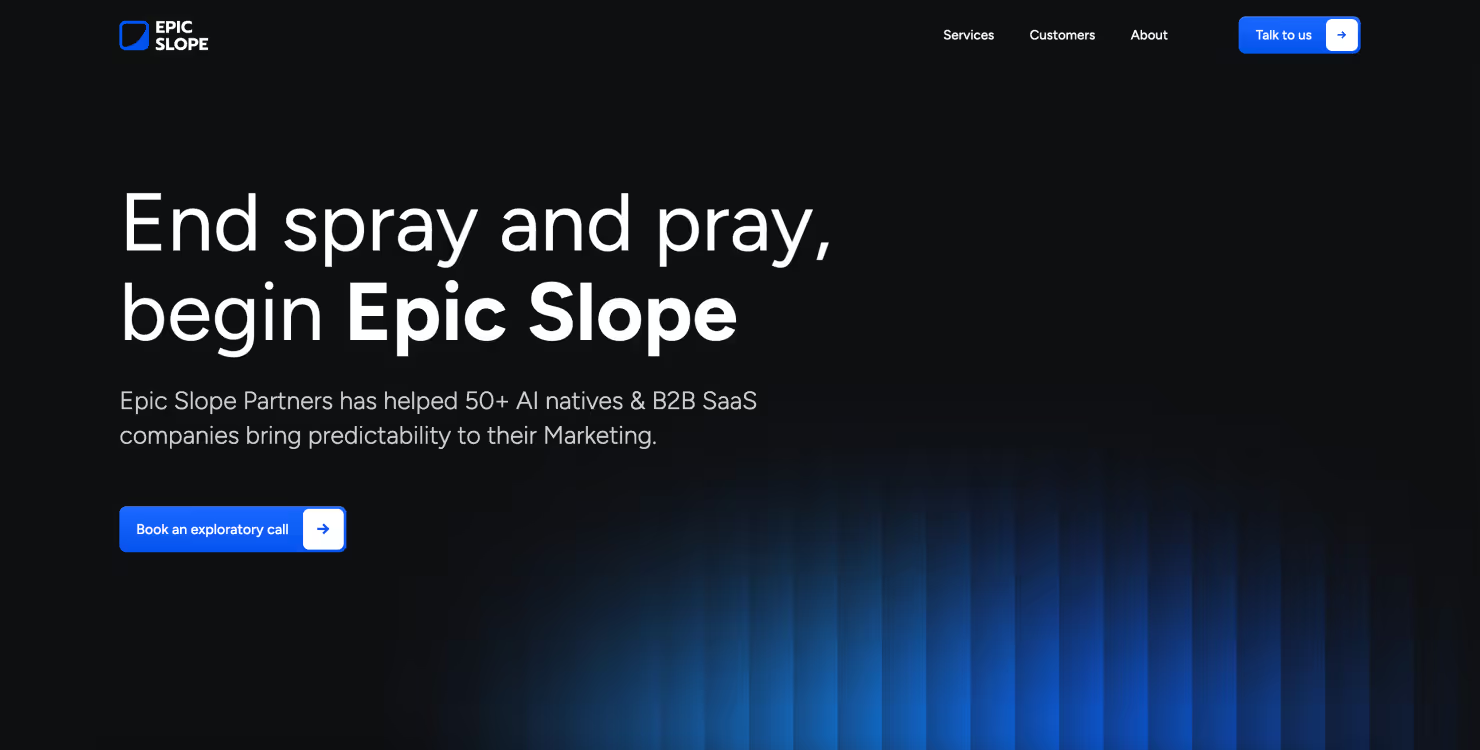
Epic Slope Partners is a growth-focused CRO agency built around demand generation for B2B SaaS and AI-native companies. The team blends technical SEO, paid marketing, CRO, content strategy, link building, Webflow development, and generative engine optimization to help brands grow in a structured way.
“They reimagined our conversion journey end-to-end, leading to a tangible spike in high-quality MQLs and SQLs. Conversion rates across the site saw a clear and measurable uplift — not through fluff or hacks, but through thoughtful, high-impact changes.”
- CEO, Testsigma
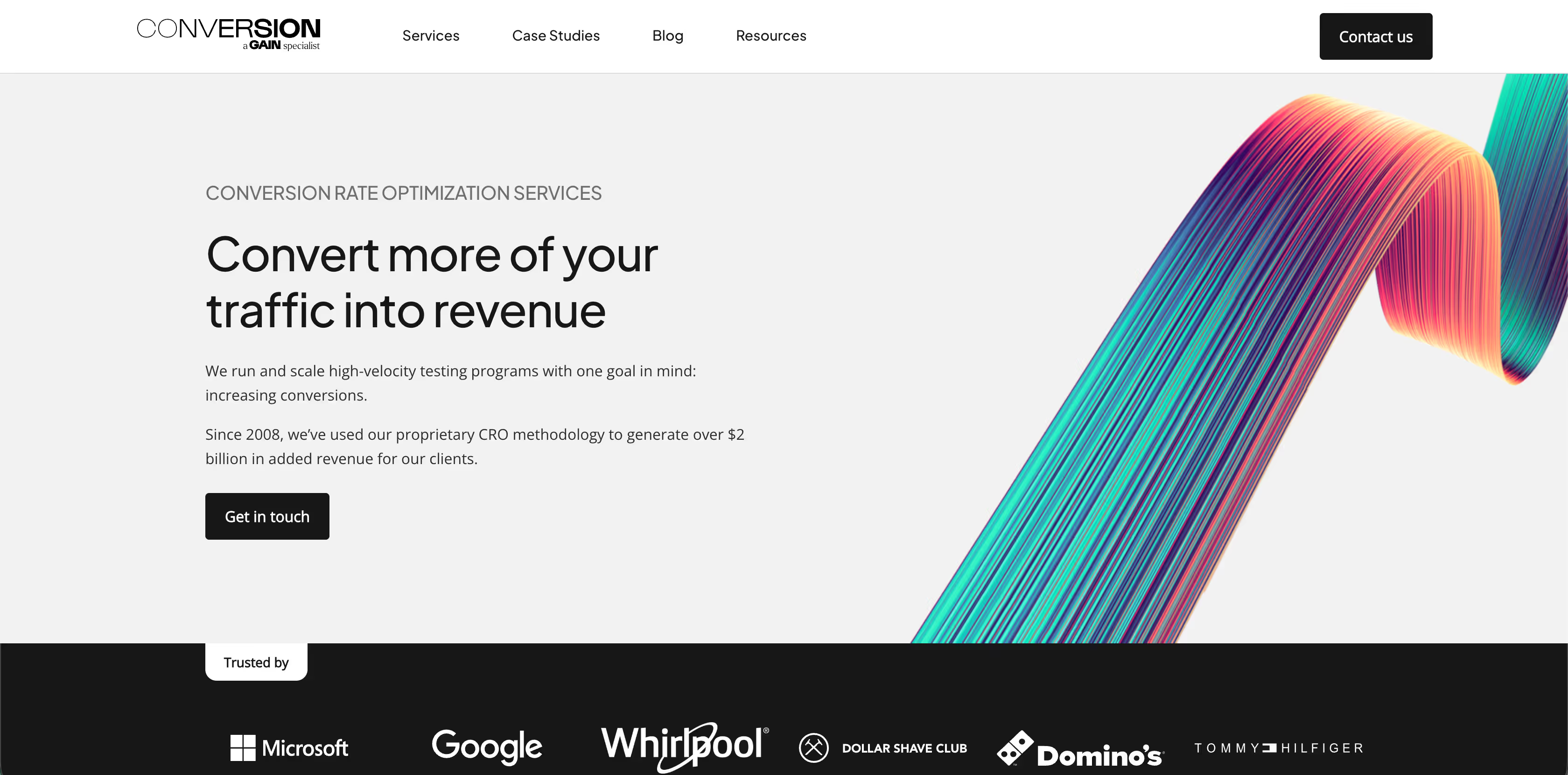
Conversion was built in 2022 by combining two companies: Conversion.com in the UK and Widerfunnel in North America. It runs structured CRO programs for mid-sized and large companies. Their work leans heavily on user research and behavioural analysis, and they usually operate in long testing cycles rather than short, one-off experiments.
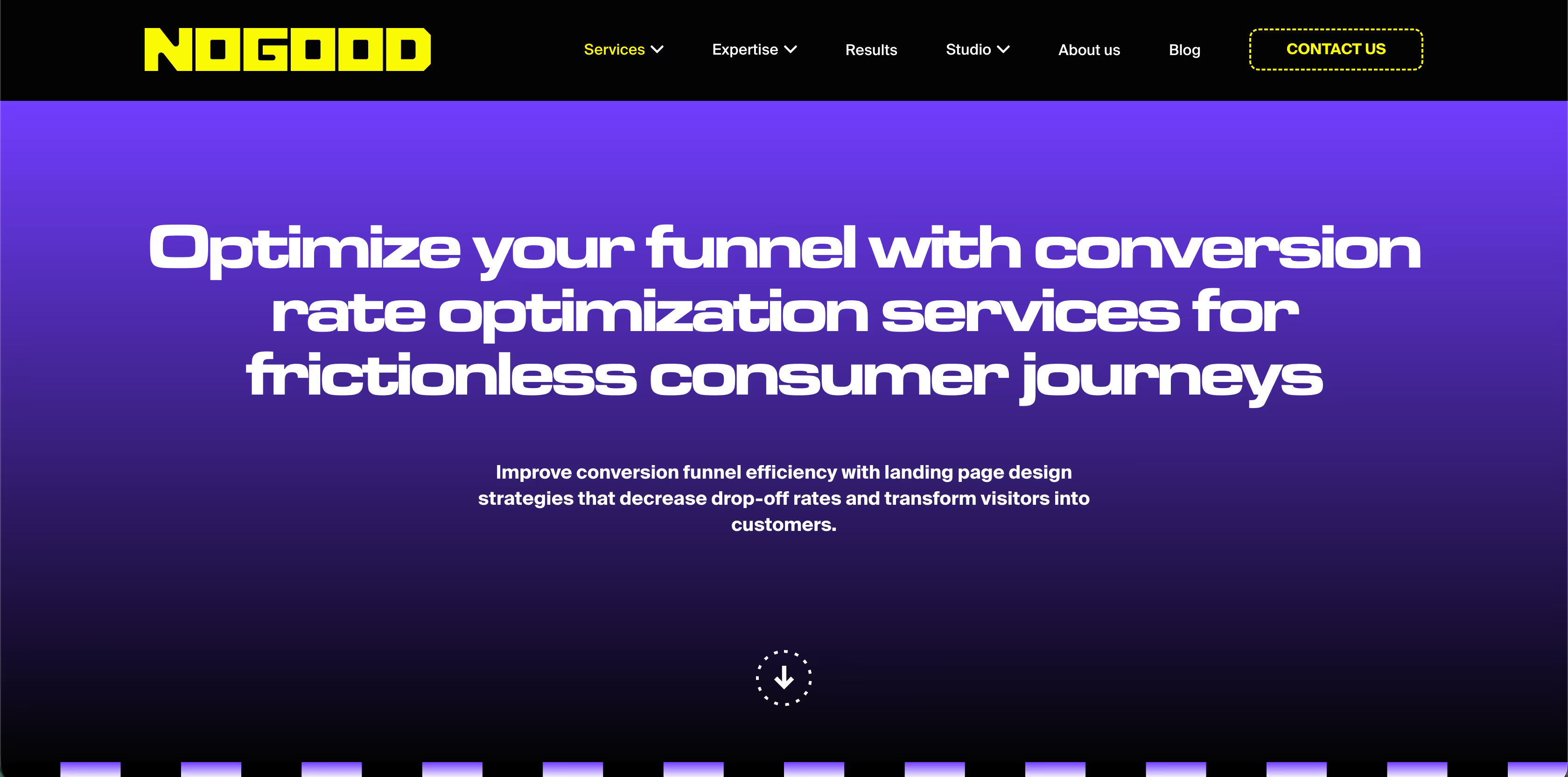
NoGood treats CRO as part of a wider growth setup. Instead of working only on site experience, they mix conversion work with acquisition, content, and analytics, which means CRO is one piece of a larger performance process.
CRO Metrics started with conversion rate optimization but has expanded into analytics, lifecycle marketing, paid media, and connected customer-journey work, all guided by rigorous testing and measurement. They run continuous experiments across websites, products, and lifecycle flows, including onboarding and retention.
Invesp follows a research-first approach to CRO. They usually start with audits and analysis before moving into testing, and their process is built around structured frameworks. They use structured research, audits, testing, and ongoing optimization to improve user experience and increase revenue.
Conversion Sciences uses a structured scientific process and experienced analysts to run experiments, measure impact, and improve conversions in a way that shows clear business value. They work with a full team that includes researchers, designers, developers, and analysts to refine everything from landing pages to complex funnels
Spiralyze operates on a predictive testing model. They use historical experiment data to select test ideas and tend to prioritize speed and volume of testing over deep exploratory research.
Most CRO agencies will tell you they can increase conversions. That part is easy to say. The harder part is knowing who actually knows what they’re doing once the contract is signed.
A good agency doesn’t start with tools or templates. They start by understanding your business, your users, and where things feel stuck. From there, everything else should be built around solving real problems, and not just running random tests.
Here’s what actually matters. Look for an agency that:
That’s the basic and the most obvious part. If an agency talks more about traffic than conversions, that’s already a red flag. CRO is about making better use of the people you already have. The right agency will spend more time on user intent, friction, and decision points than on vanity metrics.
Every test should have a reason to exist. Not “let’s try this and see”, but “we believe this change will improve X because Y”. If they can’t explain what success looks like before a test goes live, the results won’t mean much after either. Of course experimentation is important, but vagueness should not be a part of the strategy.
Good CRO work feels practical. They should be able to point out exactly where users drop off, get confused, or hesitate, and explain what needs to change. If everything stays at a high level, nothing useful will come out of it.
Opinions are easy to get in CRO. Data is what keeps things honest. Look for agencies that rely on analytics, session recordings, user feedback, and real behaviour.
The best teams don’t operate in isolation. They collaborate with product, marketing, and design, and help build a way of thinking that lasts beyond a few experiments. You should feel like they’re part of your team (more like an extension of your team), and not just sending reports once a month.
Talk to a few agencies. It’s that simple. And pay attention to how they ask questions. If they jump straight into selling solutions, be careful. If they spend most of the call trying to understand your product, users, and goals, that’s usually a better sign than any case study.
Remember, you need a partner who sticks with you through the wins and the days when nothing seems to make any sense (or convert!)
CRO works when it’s done for the right reasons. Not to chase small percentage wins, not to run endless tests, but to understand how real people move through your product and what’s stopping them from taking the next step.
Every agency in this list has a different way of approaching it. Some are very process-heavy, some move fast, some go deep into research. There’s no single “best” option. It really comes down to what you need help with and how hands-on you want the team to be.
Most teams see the biggest impact around things like demos, pricing pages, onboarding, and sign-up flows. That’s usually where users get stuck, confused, or drop off without saying why.
If you’re the kind of team that wants someone to look at those journeys from an insider’s point of view, Epic Slope is an easy one to start with. Even a short conversation can help you see your funnel more clearly and spot gaps you might be too close to notice.
In the end, a good CRO agency should make your product feel simpler for users and growth feel less forced for you. That’s really the whole point.
A good CRO agency will look at how people currently behave on your site, find places where visitors drop off or get confused, and run controlled tests to improve those areas. They use data to decide what to change. This usually means better user experience, higher conversion rates, and more value from the same traffic.
Results vary by business, but most measurable improvements happen in the first 30-60 days once changes are implemented. Quick wins often come from obvious barriers, while deeper optimization takes time as tests complete and learning compound.
You don’t need huge traffic, but you do need enough so experiments can reach meaningful numbers. If your site barely gets visitors, tests take longer and results are harder to trust. Some agencies will help you decide if you’re ready or not before signing a contract.
No reputable agency should promise a specific lift. Conversion optimization depends on your traffic, audience, offer, and other market factors. The good agencies focus on the process and realistic outcomes, not fixed percentage guarantees.
Not necessarily. Many agencies, like Epic Slope Partners for example, work with your team and help build skills internally. They run tests, share reports, and explain what they find so your team can learn and take over some work later if needed.